

The year is 2010. The final Pontiac-branded automobiles were produced in December 2009, and one last vehicle was built in January 2010. On October 31, 2010, the franchise agreements for Pontiac dealers came to an end, leaving GM with just four of its North American brands: Chevrolet, Buick, Cadillac, and GMC.
General Motors has manufactured and sold the Pontiac automobile brand since its inception in 1902. It was designed to complement GM’s more expensive Oakland line of cars. The Pontiac quickly became more popular than the Oakland, soon eclipsing Chevrolet as GM’s flagship make. It would outlast many other planned companion makes. All of us ponder at one point or another; when did Pontiac go out of business?
General Motors created the Pontiac marque in 1926 to go with its Oakland division. The first Pontiac models left production in January of that same year. The Pontiac Motor Company was formed on July 26, 1926, just east of Oakland (renamed from Pontiac), and began producing the same models sold as Oakland. It continued to offer the same automobiles that were previously marketed as Oakland through 1931 when it started creating its own designs with the 1932 Pontiac.
Pontiac Brand
Pontiac was an influential American automotive brand for many years, beginning in the 1920s and ending when it became collateral damage of the 2008 financial crisis. Affectionately called “poncho” by fans, Pontiac produced several iconic models such as the Bonneville and Safari wagon and made a huge mark in muscle cars with their GTO/Firebird/Trans AM series. sold General Motors throughout North America under Oldsmobile, Buick & Cadillac division marks. You’re not alone if you’ve ever had a beloved poncho: this label has justly earned a lot of loyalty over the years. Here is a brief account of the brand’s history. Stay in touch with us at Classics & Beyond Auto Gallery in Wayne, Michigan, near Detroit if you want to find something for your vintage Pontiac. We’d be delighted to assist you in locating anything you desire!

In terms of design, the Pontiac lineup evolved substantially from 2009 to 2010. The Torrent crossover SUV, G5 small coupe, subcompact G3, and full-sized G8 sedan are all absent from the 2010 range. Instead of continuing with its previous approach, GM decided to focus its efforts on the new G6 and Vibe models. The limited-edition Solstice was also made available in small quantities. The major reason for the decrease in model choices is that General Motors halted production of Pontiac vehicles after the 2010 model year. With that in mind, most of the 2010 versions are identical to those from 2009. For instance, the five-passenger Pontiac G6 sedan has either a four-cylinder or six-cylinder engine. There is also an automatic or manual transmission available. Additionally, the Pontiac Vibe hatchback retains its sporty design and offers a 1.8L four-cylinder engine or 2.4L four=cylinder engine depending on the trim level selected.
Muscle Cars: A Brief History of Pontiac
In 1907, the Pontiac Buggy Company was facing difficult times as their product’s popularity was waning. The owner decided to team up with a car designer who had recently been rejected by Cadillac. Together, they manufactured a small two-cylinder car and started the Oakland Motor Car Company. The Oakland car was not warmly received when it debuted, so in 1909 the company introduced a new line of four-cylinder cars with sliding gear transmissions. Later that same year, Oakland became part of General Motors. In 1926, GM released the first Pontiac car: a six-cylinder designed to sell at the price point of a four-cylinder. The Pontiac was named after an Ottawa Chief. Soon after, the Oakland brand faded into obscurity while Pontiac thrived for nearly 100 years.
Pontiac Styling
From the late 1940s through the early 1960s, Pontiac was marketed as GM’s sporty and inexpensive sub-brand. The Chief, which debuted in 1926, became the most popular six-cylinder vehicle in the United States. By 1933, Pontiac had become a leader in terms of lowest-cost inline eight-cylinder automobiles. It got its name from the Buick torpedo and featured a “silver streak” – chrome molding that ran up from the grille and along the hood. In some versions, the grille was split in two by a design feature that would return in 1959 and become Pontiac’s identifying visual element.
After WWII, North American automobile buyers were dissatisfied with the quality and fuel efficiency of GM offerings. Because of growing competition from foreign automakers in the 1950s, General Motors needed to cut costs and increase revenue in order to survive. The firm developed a completely new design for its cars that was popular during this period because it was built on a brand-new platform. Pontiac filled the niche of a good value, spacious, sturdy car above Chevrolet but lacked the panache of brands above it. However, efforts to rework the brand as a performance line began in 1957 under new management when John Z. De Lorean took over as head of engineering; the first Bonneville was introduced that year, showcasing Ponticy’s first fuel-injected engine.
The split grille spanned the entire line of Star Chief, Catalina, Safari, and Bonneville vehicles in 1959 to emphasize Pontiac’s new “Wide-Track” chassis – 5 inches wider than before for improved handling and stability. The refreshed look was very well received by the public. In addition, that year saw Pontiac ditching its classic Native American headdress emblem for a more modern V-and-star arrowhead logo.
The Muscle Car Era
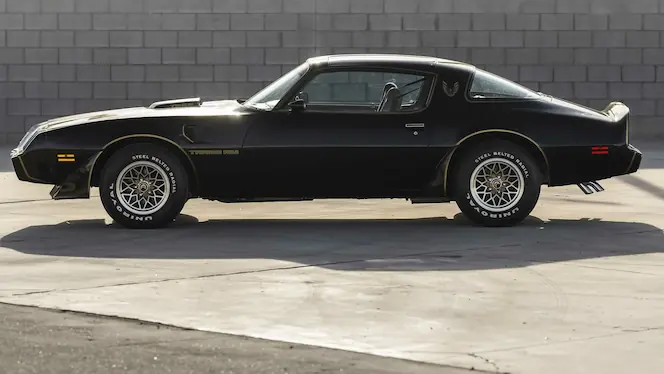
In the ’60s, Pontiac amped up their game by releasing the Grand Prix in 1962- a sleek bucket-seat coupe. Two years later, they came out with what many believe to be the original muscle car: The GTO. For those unfamiliar, GTO stands for “Gran Turismo Omologato.” In other words, Italian for “Grand Touring Homologated”. A clear reference to Ferrari race cars at the time. The Firebird debuted three years after the Mustang, Pontiac’s response to Chevy’s Camaro. The Trans Am was a speedy version of the Firebird and gained widespread popularity, especially after its starring role in the 1977 flick “Smokey and the Bandit” featuring Burt Reynolds, Sally Field, singer Jerry Reed, and Jackie Gleason.
The 1980s saw the Firebird return, as well as the Fiero two-seater mid-engine coupe and the STE touring. Pontiac’s end was hastened when it was relegated to a minor role in a 2008 corporate restructuring, putting an important brand from American automotive history to an end. Stop by Classics & Beyond Auto Gallery in Wayne, Michigan.
Little About Chevrolet Brand
Racecar driver and businessman Louis Chevrolet partnered with ousted General Motors founder William C. Durant to create Chevrolet in 1911. The company was then bought by GM in 1917. That same year, the first Chevy car- named the Classic Six- came out. It was a luxurious vehicle that could go up to speeds of 65 miles per hour due to its six-cylinder engine.
Chevrolet In 1900s
In 1918, Durant regained control of GM, and Chevrolet became the corporation’s primary brand. In 1919, Cadillac released the first mass-produced automobile in the United States, the Series D Four-Nineteen. It featured an electric starter, coil ignition, and a water-cooled engine—all features that are now standard in almost every automobile.
Chevrolet In 1920s
During the 1920s, Chevrolet saw a lot of growth. Several new models were released, like the entry-level Series 490 and the higher-quality Series H. The company also put out a sporty model called the Series V. Sales rose significantly, reaching one million vehicles by 1926. Even when GM as a whole was having trouble during the 1931’s Great Depression, Chevrolet still did well comparatively.
Chevrolet In 1950s
After WWII, Chevrolet launched a number of new models that were quite popular, including the Styleline Deluxe (its best-selling car in 1950), Bel Air (a luxury model), and Corvette (the company’s first sports vehicle). The now-iconic Corvette was originally intended to be a show vehicle but eventually went into production owing to public demand.
Chevrolet In 1960’s & 1970’s
Throughout the 1960s and 1970s, Chevrolet had several successes, including the Impala (the best-selling car in America for many years), later models Camaro, and Nova. In 1964, GM debuted its first van, the Chevy Van. In 1973, Cadillac was established as a premium brand.
Chevrolet In 1980’s & 1990’s
During the 1980s and early 1990s, Chevrolet was known for economy cars like the Cavalier and Beretta as well as larger vehicles like the Blazer and Suburban. In the late 1990s, Chevy released the Silverado pickup truck, which has become one of its most popular models.
Chevrolet In Recent Years
In recent years, Chevrolet has expanded its lineup to include a wider range of vehicles, including smaller cars like the Spark and Sonic, as well as crossovers and SUVs like the Equinox and Tahoe. The company has also reintroduced some of its classic models, like the Camaro and Impala. Chevy’s current slogan is “Find New Roads.”
Who Owns Pontiac
After General Motors declared bankruptcy in 2009, the new GM announced that it would discontinue the Pontiac brand by the end of 2010. This was part of its plan to streamline its North American operations in the wake of the global financial crisis. All Pontiac dealerships were closed by October 31, 2010, and production of Pontiac vehicles ceased in December of that same year.
The last Pontiac model ever produced was the G6, which rolled off the assembly line at GM’s plant in Orion Township, Michigan on September 23, 2009. The very last Pontiac vehicle to be sold was a G6 sedan, which went to a customer in Baltimore, Maryland on October 31, 2010.
So when did Pontiac go out of business? The brand was officially discontinued by General Motors on October 31, 2010. However, the very last Pontiac model was produced on September 23, 2009.
When Did Pontiac Go Out of Business

General Motors bought the Pontiac company in 1909 for $2.5 million, which is equivalent to $70 million today. The agreement was that Oakland would still be a division of the General Motors Corporation, and the new company formed by combining Oakland, Pontiac, and Oldsmobile would be called the General Motors Company. However, the purchase was challenged in court by the owner of the Reliance Motor Car Company, resulting in a split between GM’s William C. Durant and August Horch.
Is Pontiac still In Business?
The end of Pontiac came as a result of the global financial crisis in 2008-2009. General Motors, which was already struggling financially, decided to streamline its North American operations in an effort to save money. As part of this plan, GM announced that it would discontinue the Pontiac brand by the end of 2010. All Pontiac dealerships were closed by October 31, 2010, and production of Pontiac vehicles ceased in December of that same year.
Why did Pontiac shut down?
General Motors’ decision to shutter the Pontiac automobile brand is unclear. We can only speculate that this was a commercial choice based on financial and strategic factors, given the circumstances. One of these factors, according to some experts, was the high sales volume required for each new model (compared to other vehicle brands such as Buick or Chevrolet).
The Pontiac brand became globally recognized in the 1970s when Burt Reynolds drove a black and gold Firebird in the hit film Smokey and the Bandit. However, General Motors began to cut back on its performance image and mechanical problems with some of the later models damaged the company’s reputation with people who bought sports cars. In recent years – with GM’s troubles – Pontiac had been in terminal decline.
Another important cause, according to other experts, is that consumers are increasingly preferring smaller, more fuel-efficient, and less expensive automobiles. Brands such as Ford, Mercury, Nissan, and Hyundai were better equipped to answer this change in customer demand with models including Yaris, and Cobalt.
The Pontiac brand was especially relevant during the sixties and seventies and it is important to highlight that in your marketing. During the 1950s to 1980s, GM offered a wide selection of models including Chevrolet, Oldsmobile, Buick, and Pontiac.
Last Year For Pontiac
The last year for Pontiac production is 2009 when GM motors decided to shut down the production for Pontiac.
The Last Pontiac
The final Pontiac-badged car was assembled on December 29th, 2009 at 11:59 pm.
The very last Pontiac car to ever be built was a 2010 Torrent model. It was donated to the Ronald McDonald House Charities of Eastern Michigan, located in where the vehicle was assembled: Pontiac, Michigan.
According to several sources, GM manufactured the final Pontiac on December 28th, 2009, and gave it to the Ronald McDonald House Charities of Eastern Michigan. All other sources claim that the Torrent was completed on December 29th, 2009, and that it was donated just before midnight.
Unfortunately, there is no way for us to determine which information is correct and which isn’t. We can only hope that GM provides an official response regarding this issue at some time in the future.
Founder Of The Pontiac
The final vehicles of the first generation Pontiac were introduced in 1954, after Edward Murphy, head of the Motor Division, died in 1952.
More than a million Pontiacs had been produced and sold for this year before it was discontinued on October 31, 2009 (after 58 years). The final vehicle under the brand was a 2010 Torrent FWD 4-cylinder EX variant, which was given to the Ronald McDonald House Charities of Eastern Michigan. The last Pontiac car was given away at 11:59 pm on December 29, 2009, where the Pontiac company originated (Pontiac, Michigan).
In 2010, GM replaced the Pontiac marque with a new vehicle brand known as G3. G3 replaced Pontiac in Canada and the Middle East while being sold as a Buick in other markets.
Will Pontiac Ever Come Back In Business?
General Motors announced on February 14th, 2010, through a press release, that the Pontiac brand would remain retired and no more cars will be manufactured under the Pontiac name. The last plant where these models were produced closed on December 29th, 2009 at 11:59 p.m. The final Pontiac Torrent (a 2010 model), was given to the Eastern Michigan Ronald McDonald House Charities on this date. The donation ceremony was held before midnight on December 29th, 2009 at the assembly plant in Pontiac, Michigan, which is where the brand was founded.
General Motors announced on April 26th, 2010 that it would focus on its four main brands: Buick, Cadillac, Chevrolet, and GMC. The company planned to phase out Pontiac and Saturn by the end of 2011. Consequently, it is highly unlikely Pontiac will ever resume business again.
Do They Make Pontiac Cars Anymore
No, Pontiac cars are no longer being manufactured. The last Pontiac car was assembled on December 29th, 2009 and the company has since been discontinued.
Reasons When Pontiac Went Out of Business?
Following the success of its predecessors, the brand was discontinued by GM in 2013. Starting in 1997 with a single vehicle and culminating after eight years with over 50 models, it would be difficult not to notice that this is a brief history rather than a comprehensive overview of all things Pontiac. The company’s name may have been changed again because General Motors had purchased Buick from Oldsmobile in 1909. In addition to mounting debt and declining sales figures, other factors contributed to Pontiac’s demise, including high prices and quality issues. When compared to competitors like Ford or Dodge, General Motors wanted more market share for Buick; as a result, it introduced highly expensive automobiles on an annual basis at first (notably upmarket LaSalle). However, because many people were unhappy about their poor performance or lack of features over previous versions (for example), customers grew tired of purchasing top-of-the-line vehicles every year. After GM acquired the firm in 1909, there were several causes for its failure. For one thing, mounting debt and dwindling sales figures brought down the company. The firm was relatively new to the car business when it was bought by GM in 1909. Pontiac released a car in 1932 that was designed to compete with Ford’s Model A. The car didn’t sell well because it was expensive and had low performance, but this is where Pontiac started to establish itself as a company focused on style and performance. Pontiac is known for innovating car technology, including the first mass-produced overhead-cam engine and the first automatic transmission with overdrive.
GM’s decision to phase out the brand had two significant causes.
During the past few years of its existence, Pontiac has been losing money. Because GM was in severe financial distress ahead of its bankruptcy in 2009, this put Pontiac into a no-win situation.
Pontiac was selling Chevrolet vehicles under a different name often at a cheaper price, causing losses not only for Pontiac but also damaging the Chevrolet brand. A few GM employees tried hard to save the brand but ultimately failed.
Letter From Vice President of Sales For General Motors
Susan Docherty, vice president of sales for General Motors in the United States, wrote the following letter to the editor of Automotive News on October 26, 2009: “This was a situation that we handled incorrectly.”
“Regarding Robert E. Cherney’s Oct. 19 letter, “Why kill Pontiac? Why keep Buick?”: It was an immensely difficult decision to make, but phasing out Pontiac was one of the most essential decisions of my career.
For several years, Pontiac was unprofitable. A team who cared deeply about the brand tried unsuccessfully to make it profitable again — but none of their efforts panned out.
We kept Buick in the GM family because it is quite profitable and will expand with new models for the next several years, giving Buick a presence in many sedan and crossover categories.
The Enclave has been a market success, with 50 percent of the buyers being entirely new to Buick. The 2010 LaCrosse is doing well too, managing to draw in younger buyers along with those who usually trade in imports such as Lexus and Acura. Lastly, the 2011 Regal arrives in U.S. dealerships come springtime; it’s a mid-sized sport sedan. The Regal has already been a big success in China, and it is based on the award-winning Opel Insignia, which was named European Car of the Year in 2009. A small crossover and a tiny sedan will be added to the family later on.
“Sure, we disagree with some of the choices that were made,” he says. “But I think it’s important, to be honest, and open. We believe the correct brand was chosen and that Buick has a bright future ahead of it.
General Motors announced in 2005 that it would be phasing out Pontiac as a brand due to debt and declining sales, citing the bankruptcy of General Motors Corporation (GM) as one of its reasons. Well, “We hope we can answer all of your questions regarding,” when did Pontiac declare bankruptcy?